
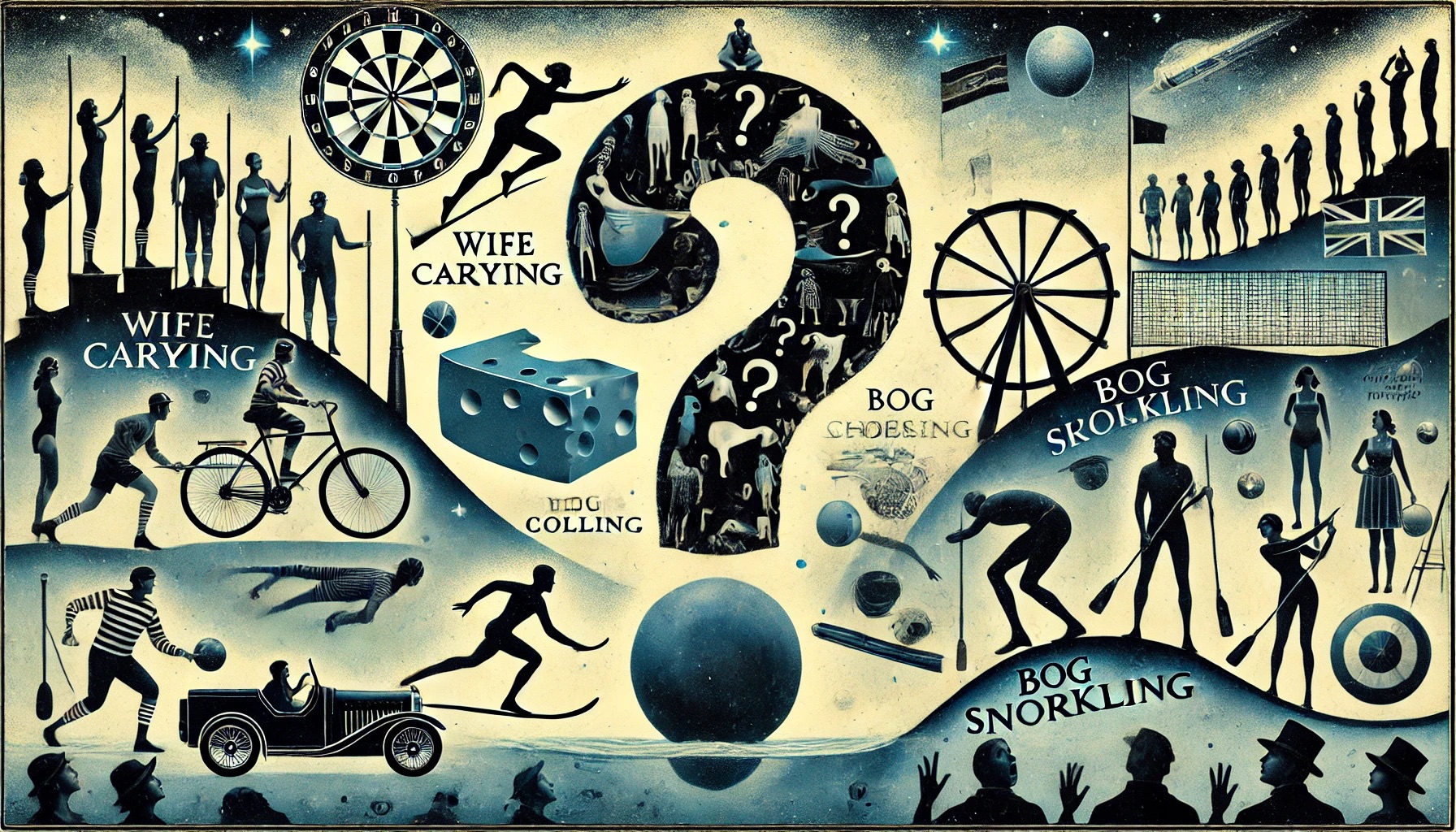
In a world dominated by football, basketball, and soccer, there exists a fascinating underbelly of sports that defy convention and push the boundaries of what we consider athletic competition. These unusual sports, born from cultural traditions, whimsical ideas, or sheer boredom, offer a refreshing break from the mainstream. They remind us that at its core, sport is about fun, community, and the joy of play. So, let’s dive into the weird and wonderful world of sports you’ve probably never heard of – but might find yourself itching to try!
Wife Carrying
Rules: Competitors race through an obstacle course while carrying a female teammate. The woman must weigh at least 49kg (108 lbs) or wear a weighted vest to make up the difference.
Origin: This sport originated in Finland, inspired by the 19th-century legend of Herkko Rosvo-Ronkainen, a robber who allegedly tested his gang members by making them carry heavy sacks on their backs.
Where it’s played: While the World Championships are held annually in Sonkajärvi, Finland, the sport has gained popularity in countries like the USA, UK, and Australia.
Cheese Rolling
Rules: Competitors chase a 9-pound wheel of Double Gloucester cheese down a steep hill. The first person to cross the finish line wins the cheese.
Origin: The origins are unclear, but the event has been held at Cooper’s Hill in Gloucestershire, England, for at least 200 years. Some believe it started as a pagan ritual to encourage fertility.
Where it’s played: While the most famous event is in Gloucestershire, similar events have popped up in Canada, New Zealand, and even Nepal.
Quidditch (Quadball)
Rules: Two teams of seven players mounted on broomsticks try to score points by throwing a ball through hoops while avoiding being hit by other balls. A player called the “snitch runner” tries to avoid being caught.
Origin: Inspired by the magical sport in J.K. Rowling’s Harry Potter series, Quidditch was adapted for real-world play by students at Middlebury College in 2005.
Where it’s played: Now known as Quadball, it’s played in over 40 countries, with regular national and international championships.
Bog Snorkelling
Rules: Competitors must complete two lengths of a 60-yard peat bog trench filled with water, using only flipper power. Traditional swimming strokes are not allowed, and participants often wear snorkels and diving masks.
Origin: The sport was invented in 1976 in Llanwrtyd Wells, Wales, as a way to attract tourists to the area.
Where it’s played: While the World Championships are held annually in Wales, bog snorkelling events have spread to countries like Australia, Ireland, and Sweden.
Sepak Takraw
Rules: Similar to volleyball, but players can only use their feet, knees, chest, and head to touch the ball. The game is played on a badminton-sized court with a net.
Origin: Sepak Takraw has its roots in 15th-century Southeast Asia, evolving from a popular children’s game.
Where it’s played: It’s most popular in Southeast Asian countries like Thailand, Malaysia, and Indonesia, but has been gaining traction in other parts of the world.
Psychology of weird sports
The appeal of these unusual sports goes beyond their quirky nature. Psychologists suggest several reasons why people are drawn to niche sports:
- Novelty seeking: Humans are naturally drawn to new experiences, and unusual sports offer a fresh challenge.
- Community building: Niche sports often foster tight-knit communities, providing a sense of belonging.
- Skill mastery: These sports often require unique skills, appealing to those who enjoy learning and perfecting new abilities.
- Identity expression: Participating in an unusual sport can be a way of expressing individuality.
- Stress relief: The often absurd nature of these sports can provide a much-needed escape from daily stresses.
VIII. How weird sports gain popularity
The journey from obscure pastime to recognized sport often follows a similar pattern:
- Local tradition: Many start as local customs or events.
- Media attention: Quirky sports often attract media coverage, spreading awareness.
- Social media: Viral videos and social media sharing can rapidly increase exposure.
- Organized competitions: Regular events and championships help formalize the sport.
- International spread: As interest grows, the sport spreads to other countries.
- Standardization: Rules become more formalized, often with governing bodies established.
- Cultural export: Some sports become associated with their country of origin, boosting tourism and cultural exchange.
From rolling cheese down a hill to carrying your spouse through an obstacle course, these weird and wonderful sports remind us of the diversity of human creativity and the universal love for play and competition. They challenge our preconceptions of what constitutes a sport and invite us to embrace the unusual and the absurd.
So the next time you’re looking for a new hobby or just a good laugh, why not give one of these unconventional sports a try? You might discover a hidden talent for bog snorkelling or find yourself captivated by the acrobatic feats of Sepak Takraw. After all, in the world of weird sports, the only limit is our imagination.
Weird Sports FAQs
- Are these unusual sports recognized by international sports organizations? Some, like Sepak Takraw, are recognized by the International Olympic Committee, though they’re not yet Olympic sports. Others have their own international federations.
- Can I make money playing these sports? While professional leagues exist for some (like Sepak Takraw), most are amateur sports. However, some offer prize money in major competitions.
- Are these sports dangerous? Like any physical activity, there are risks. Cheese Rolling, for instance, often results in injuries. Always follow safety guidelines and know your limits.
- How can I find unusual sports to try in my area? Check local sports clubs, community centers, or search online for niche sports groups in your area. Many have beginner-friendly events.
- Could any of these sports become mainstream in the future? It’s possible! Sports like skateboarding and surfing were once considered niche but are now in the Olympics. The key factors are growing participation and media interest.
For more weird and curious topics to explore, check out The Randomist’s curiosities and oddities feed!